Acne scars can linger long after breakouts clear, affecting texture and confidence. If you are exploring treatment in West Palm Beach, you have likely run into two options: classic microneedling and radiofrequency (RF) microneedling. Both create controlled micro-injuries that prompt the skin to build new collagen, but they work at different depths and suit different kinds of scarring. This guide leads with the scars themselves, what each approach can and cannot do for them, and how a provider chooses between the two. Body+Beauty Lab West Palm Beach offers both microneedling and RF microneedling, and for a general comparison of the two treatments, see our guide to RF microneedling vs. classic microneedling.
What is the difference between RF microneedling and classic microneedling for acne scars in West Palm Beach?
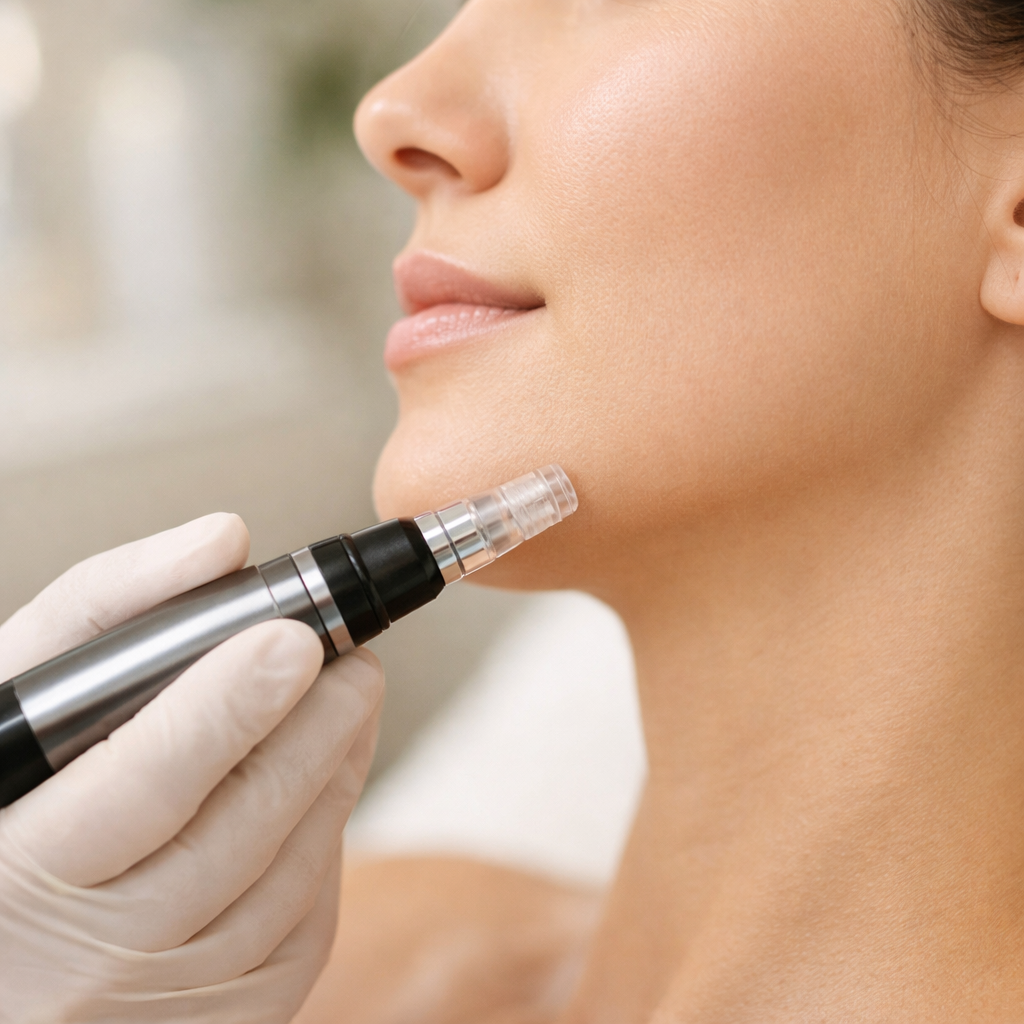
Classic microneedling uses fine needles to create tiny channels in the skin. The American Academy of Dermatology (AAD) explains that it works by stimulating your body to make collagen, which is why it is also called collagen induction therapy. RF microneedling adds energy to that process. Cleveland Clinic describes RF microneedling devices as using "specially insulated needles that deliver high-intensity radio frequency energy into the targeted tissue under your skin."
In practical terms, the heat from RF reaches below the surface, which is why it is often considered for scars with more depth or texture, while classic microneedling is often considered for milder scarring and overall skin texture. That is a general pattern, not a rule. Scar type, skin type, and how your skin heals all matter, and a provider can sort that out only by examining your skin.
Body+Beauty Lab's West Palm Beach location offers both microneedling and RF microneedling, so the recommendation can follow your skin rather than the device on hand.
How long does it take to see results from microneedling for acne scars?
Results build gradually, because the skin needs time to make new collagen. Sources describe the schedule a little differently. The AAD says that when a dermatologist is treating acne scars, you may need 3 to 5 treatments, performed every 2 to 4 weeks. The American Society for Dermatologic Surgery (ASDS) says that a series of monthly treatments, at least three, is typically required for optimal results. For RF microneedling, Cleveland Clinic says best results are typically seen three to six months from the first treatment.
Your own schedule will depend on your scars, your skin, and your provider's protocol. Many people notice smoother texture building over weeks to months, and changes can be subtle from one visit to the next. Photos taken at each visit can make gradual progress easier to see. If you have an event in mind, build in plenty of lead time, because the collagen response continues after the last session.
Which is better for deep acne scars: RF microneedling or traditional microneedling?
There is no single answer, and anyone who offers one before examining your skin is guessing. RF microneedling is often considered when scarring is deeper or more textured, because the added heat reaches further below the surface. Classic microneedling may be a reasonable starting point for shallower scars and general texture concerns.
Acne scars also come in more than one shape. Some are broad, shallow dips, some have defined edges, and some are narrow and deep. Different scar shapes can respond to different treatments, and some deep scars may need approaches beyond microneedling altogether. The AAD notes that your dermatologist may use more than one treatment to give you the best results, and its list of options for sunken acne scars includes chemical peels, fillers, laser treatment, microneedling, platelet-rich plasma (PRP), and radiofrequency. If you are weighing microneedling against resurfacing, our comparison of laser resurfacing and microneedling may help.
Can microneedling improve the appearance of acne scars, and what can it not do?
Microneedling can soften the look of acne scars for many people. The AAD says that studies have found a treatment plan of 3 to 5 sessions can fade acne scars by 50% to 70%. Individual results vary, and no treatment can promise a specific outcome for your skin.
It also has limits. Microneedling does not typically erase scars completely, and deeper scarring may improve less than shallow scarring. Raised scars, such as keloid or hypertrophic scars, are a different problem from sunken acne scars and generally need a different approach, so mention any history of raised scarring at your consultation.
Active acne matters too. The AAD says that treatment for scars typically begins after you have acne under control, and the ASDS notes that those with active acne are generally not considered a good candidate (yet). If you are still breaking out, treating the acne comes first.
Should I choose classic or RF microneedling for rolling acne scars?
Rolling scars are broad, wave-like depressions with soft, sloping edges. Whether classic or RF microneedling suits them depends on how deep and how widespread they are, and on how much downtime you can accept. Mild rolling scars may respond to classic microneedling. Deeper or more extensive ones may lead a provider to recommend RF, or a combination of treatments over time.
Some patients begin with classic microneedling to see how their skin responds and move to RF later if they want more change. Others start with RF from the first visit. Both paths can be reasonable, and the better one is the one your provider matches to your scars and goals.
How many microneedling sessions are typically needed for acne scars?
The ranges quoted above, from two to four sessions for RF (Cleveland Clinic) to three to five (AAD) or at least three (ASDS), show why a single number is misleading. Deeper or more widespread scarring tends to need more sessions, and your skin's response after each visit shapes the plan. Spacing matters as well, because the skin needs time to heal and rebuild between treatments, and treating too often can irritate the skin, particularly in deeper skin tones.
Some patients return for occasional follow-up sessions after the main series, and others do not. Ask your provider what they expect for your scars, and how they will decide when you have reached a good stopping point. Body+Beauty Lab also offers VISIA Skin Analysis, which can document your skin's texture so you and your provider can compare changes over time.
Does RF microneedling hurt more than classic microneedling?
Both treatments are typically done after topical numbing, and Cleveland Clinic notes that RF microneedling is performed under topical numbing. Most people tolerate the treatments well, and comfort measures are used. Classic microneedling is often described as a prickling sensation, while RF can feel warmer because of the heat. Your provider can adjust depth, energy, and technique to keep you comfortable, and you should tell them if something feels like too much.
Afterward, expect redness and a feeling like a mild sunburn. The ASDS puts downtime at anywhere from two to seven days, ranging from looking like a mild sunburn to a peel, while Cleveland Clinic says RF skin is typically mildly red for around a day. How you heal depends on the treatment settings and your skin, and your provider will tell you what to expect.
Is microneedling for acne scars safe for darker skin tones?
The AAD states that microneedling is safe for all skin tones, and that radiofrequency microneedling is safe for all skin tones. The same AAD page also warns that when microneedling is done by someone without enough medical training in skin, there is an increased risk of side effects like infection, scarring, or long-lasting skin discoloration. In other words, who performs the treatment and how it is tailored to your skin both matter.
Any procedure that injures the skin can trigger pigment changes in some people, and darker skin tones can be more prone to them. Tell your provider about any history of dark marks or melasma, and ask how they adjust settings and plan aftercare for your skin. Some providers use a small test area first.
Sun protection is part of aftercare for everyone. The AAD recommends a broad-spectrum, water-resistant sunscreen with SPF 30 or higher, reapplied roughly every two hours when outdoors, which matters in South Florida. If you have a history of melasma or stubborn dark marks, ask whether chemical peels or another treatment might be a better first step.
Frequently Asked Questions
How soon after microneedling can I wear makeup?
The AAD says it is important to wait 24 hours before you apply makeup, and the ASDS says makeup and sunscreen can be used after 24 hours. Your provider's aftercare instructions come first, and our pre and post care instructions cover what to expect.
Can I combine microneedling with other acne scar treatments?
Often, yes. The AAD notes that studies show using PRP along with another treatment like microneedling can lead to less visible scarring, and Body+Beauty Lab offers PRP, PRF, and exosome treatments that can be used as a complement to microneedling. Your provider will decide what to combine and in what order.
Will microneedling make my active acne worse?
Microneedling is not generally done over active, inflamed acne. Painful, pus-filled, or deep pimples should be cleared first, so get your acne under control before starting a scar series.
How much does microneedling for acne scars cost in West Palm Beach?
Pricing depends on the device, the treatment area, and the number of sessions, so we do not publish a single figure here. To get an accurate quote, call the West Palm Beach team at 561-349-6599 or schedule a consultation. Our guide to RF microneedling cost explains what affects the price.
Is there downtime after RF microneedling for acne scars?
Most people see redness and mild swelling that settle over a few days, though sources describe anything from about a day to a week depending on the treatment. Your provider will describe the downtime to expect for your settings, and you can plan around events accordingly.
Can microneedling help with acne scars on the body, or is it only for the face?
Microneedling can be used on some areas of the body as well as the face. Settings and the number of sessions differ by area, so ask your provider whether scars on your chest, back, or shoulders are good candidates.
How Body+Beauty Lab Can Help
Body+Beauty Lab West Palm Beach, at 645 South Olive Avenue, offers both microneedling and RF microneedling. A consultation starts with a look at your scars, your skin type, and your goals, and the plan follows from that. We will tell you honestly what microneedling can and cannot do for your skin, and when another treatment may suit you better.

If you are ready to talk it through, schedule a consultation or call 561-349-6599.
About the Author
Korin Korman, Founder and CEO