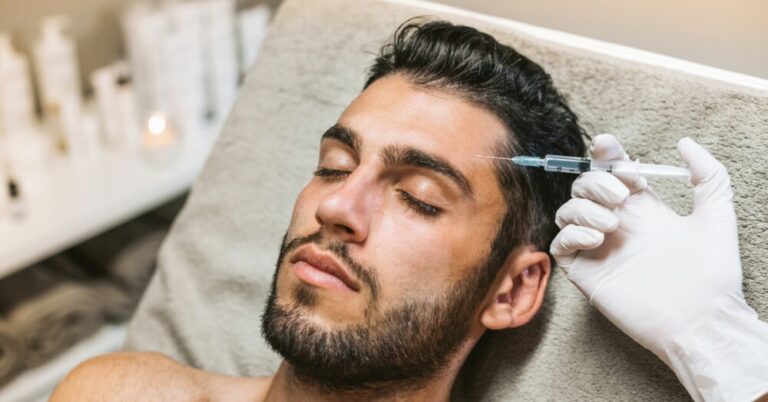
Searching for Botox in Philadelphia returns a long list of options, from Center City med spas to suburban dermatology practices. Having plenty of choices does not tell you who is the right fit. Choosing an injector well means looking at training, asking good questions, and understanding what a thorough consultation should cover, rather than scrolling reviews or comparing promotional prices.
This guide covers the part most searches skip: how to evaluate an injector, what to ask during a consultation, how the main neuromodulators differ, and what to expect afterward. Whether you are considering your first appointment or looking for a new provider, the goal is a plan built around your face and your goals. Results vary from person to person.
What Qualifications Should a Philadelphia Botox Injector Have?
Botox is a prescription medical treatment, so the first thing to confirm is that the person injecting you is licensed and trained to do it. The FDA says to ask whether your provider is "licensed and trained to administer the product" and to confirm that the product comes from an authorized source.
Training matters as much as the license. The American Academy of Dermatology (AAD) suggests asking a direct question: "Find out how many times your doctor has performed the exact procedure." It also suggests asking how often the provider treats patients with your skin tone and in your age range. Good injectors welcome these questions and answer them plainly. We do, and we want you to ask.
Some other things to look for:
- A provider who can explain their plan. They should be able to say which muscles they will treat and why, rather than offering the same plan to everyone.
- A real consultation. A review of your goals, medical history, and prior treatments should come before treatment, not just at a first visit.
- Time to decide. Be cautious of anyone who pressures you into same-day treatment.
- Medical oversight. Our Pennsylvania locations are overseen by our Medical Director, Dr. Benjamin Lam.
Product authenticity is part of the picture too. The FDA has reported that unsafe counterfeit versions of Botox have been found in multiple states and given to people for cosmetic purposes. It is reasonable to ask any provider, us included, to show you the product before treatment.
How Much Does Botox Cost in Philadelphia?
Pricing varies from practice to practice, and the amount of product you need depends on your muscles and your goals, so a quote after an in-person assessment is the only reliable number. Here is ours: Botox, Dysport, Xeomin, and Jeuveau are $15 per unit, or $13 per unit for members of our Pennsylvania Bank membership. The membership is $150 a month, banked toward any service, and banked months do not expire until 12 months after each month you bank. For DAXXIFY pricing, call us at 215-258-8301.
Whichever practice you choose, ask what is included before you compare prices:
- The unit estimate. Ask how many units your plan is expected to use and whether it can be adjusted during treatment.
- Follow-up. Ask whether a follow-up visit is included if you want an adjustment.
- Fees. Ask whether there are any consultation or other fees.
Cosmetic treatment is generally not covered by insurance. The AAD advises that you contact your insurance company to find out what your policy covers, noting that treatments for signs of aging are generally not covered while treatment for excessive sweating may be covered at least partly.
What Should You Expect During a Philadelphia Botox Consultation?
A thorough consultation looks at your face at rest and in motion, discusses realistic outcomes, reviews your health history, and ends with a plan you understand. We ask about previous neuromodulator treatments, your medications (including blood thinners), neuromuscular conditions, and whether you are pregnant or breastfeeding. Cleveland Clinic says you should not get this treatment if you are pregnant, breastfeeding, or have a neuromuscular disease, drooping eyelids, or weak facial muscles.
You should leave knowing which areas will be treated, the estimated number of units, what to expect for timing, and what side effects are possible. For timing, the AAD says most people see results within 3 to 7 days, and the improvements last about 3 to 4 months, sometimes longer. Cleveland Clinic adds that full results are visible within 10 to 14 days, that treatments are typically repeated every three to six months to maintain them, and that possible side effects include pain, swelling, redness or bruising at the treatment site, headache, and temporary drooping eyelids.
We also offer VISIA Skin Analysis as a complimentary service. It documents your skin so you and your provider can compare changes over time.
Here are some good questions to bring, to us or to any provider:
- Which neuromodulator do you recommend for my goals, and why?
- How many units do you estimate, and can we adjust during treatment?
- How do you handle side effects or an unexpected result?
- What happens if I want an adjustment afterward?
Bring reference photos if they help, but keep in mind that your bone structure, skin, and muscle patterns shape what is achievable. A good injector explains the limits as clearly as the possibilities.
How Do Botox, Dysport, Jeuveau, Xeomin, and DAXXIFY Compare?
All five are neuromodulators, injectable treatments that temporarily relax the muscles behind expression lines. We offer Botox, Dysport, Jeuveau, Xeomin, and DAXXIFY. They differ in formulation and in how they behave, and the right choice depends on your treatment area, your history with these products, and what you want. Our Dysport vs. Botox guide goes deeper on that pair.
Here is how we think about each one:
- Dysport tends to spread out, which can make it a good fit for larger or more stubborn areas.
- Xeomin contains only the active ingredient.
- Jeuveau was created exclusively for cosmetic use.
- DAXXIFY is our longer-lasting option. Clinical studies show results averaging about six months, and up to nine months for some patients, compared with three to four months for most neuromodulators.
Individual results vary, and a longer-lasting product is not automatically the better choice for everyone. Your injector should explain why they recommend a particular product for you. If you have had one of these before, tell them how it worked and how long it lasted. If you want to switch products, ask how they would adjust the plan.
What Are the Most Common Mistakes When Choosing and Preparing for Botox?
The biggest mistakes happen before and after the appointment, not during it. Here is what to watch for.
- Choosing on price alone. The cheapest quote tells you nothing about training, product source, or how many units you are actually getting. Ask for the unit estimate and compare plans, not just per-unit rates.
- Skipping the consultation questions. Ask about experience, the product, and the plan, and notice whether the answers are clear and unhurried.
- Not sharing your history. Tell your provider about your medications, supplements, health conditions, and past treatments so the plan can be tailored to you.
- Ignoring aftercare instructions. Instructions differ between practices, so your provider's guidance comes first. As one example, Cleveland Clinic advises staying upright for three to four hours, avoiding rubbing or pressing on the treated area for 12 hours, and avoiding physical exertion for 24 hours. It also says to call your provider right away if you notice vision problems, trouble swallowing, or shortness of breath. Our complete Botox aftercare guide and pre and post care instructions cover what we recommend.
Is 40 Too Late to Start Botox?
No single age is right for everyone. Many people begin when expression lines start to bother them, whether that is in their 30s, 40s, 50s, or later. What matters is what you see in the mirror when you move your face and what you want from treatment.
You may hear that starting early prevents deeper lines later. The evidence for that is limited, so be cautious of anyone who promises it. What neuromodulators do reliably is soften the lines caused by muscle movement for a few months at a time. Lines that are visible even at rest, along with volume loss or looseness in the skin, may call for other approaches. Depending on your goals, we may talk with you about options such as Sculptra or Ultherapy alongside or instead of a neuromodulator. A consultation should tell you honestly whether Botox on its own will meet your expectations.
What Happens After 10 Years of Botox?
Botox effects are temporary. As each treatment wears off, which typically takes about three to four months, movement gradually returns and your lines return toward where they would be without treatment. That is true whether it is your first appointment or your fortieth.
Individual experiences vary. If you have been treated for years, a regular check-in with your injector is the best way to review your dose, your goals, and any changes in your face. Goals shift over time, and what looked natural at one age may feel different at another. If you want to stop, talk to your provider about what to expect. Some people choose to treat less often, and that is a conversation to have with your injector.
How We Approach Botox in Philadelphia and Radnor
At our Philadelphia and Radnor locations, we offer all five neuromodulators, and we recommend a product and a plan based on your goals, your treatment area, and how you have responded to treatment in the past.
Your consultation is where the plan takes shape. We talk through your goals and history, explain what is realistic, and give you an estimate before treatment. If you want an objective record of your skin, VISIA Skin Analysis is available.
To talk through whether Botox fits your goals, schedule a consultation or call us at 215-258-8301.
Frequently Asked Questions About Botox in Philadelphia
What is the 4-hour rule for Botox?
It is a common aftercare guideline: stay upright and avoid lying down for a few hours after treatment. Practices differ on the details, so follow the instructions your own provider gives you. We cover what we recommend in our aftercare guide above.
How much is 20 units of Botox in Philadelphia?
At $15 per unit, 20 units is $300, or $260 at our member price of $13 per unit. The number of units you need depends on your muscles and goals, so we give you an estimate at your consultation.
Will Botox make me look frozen or overdone?
It does not have to. How natural your result looks depends on the plan, including where and how much product is used. Tell your injector at the start how much movement you want to keep, and ask whether they can begin conservatively and adjust at a follow-up. Results vary from person to person.
What should I bring to my first Botox appointment?
Bring a list of your medications and supplements, a note of any past neuromodulator or filler treatments and when you had them, any photos that show the look you want, and your questions. We review your history with you before we plan anything.
Can you switch between Botox, Dysport, and other neuromodulators?
Many people do. Tell your injector which products you have had, how they worked, and how long they lasted, and they can recommend what to try next.
How do you know if your Philadelphia Botox injector is qualified?
Ask whether they are licensed and trained to administer the product, how many times they have performed the procedure, and how often they treat patients like you. Ask where the product comes from. A good injector will answer clearly and will not rush you.
About the Author
Korin Korman, Founder and CEO