
If you’ve been searching for a real answer on whether microneedling can improve cellulite, you’re not alone. This article breaks down what microneedling for cellulite can actually do, where it falls short, and which treatments deliver the smoothest, most lasting results, especially if you’re exploring options for microneedling in Philadelphia.
We’ll compare traditional microneedling, radiofrequency microneedling, and alternative cellulite treatments so you can walk into your consultation informed and confident.
Key Takeaways:
- Traditional microneedling can improve skin texture and firmness, but RF microneedling reaches deeper layers where cellulite actually forms, making it more effective for visible smoothing.
- Mild to moderate cellulite responds best to microneedling treatments, with most clients seeing noticeable results after a series of 3 to 6 sessions over 3 to 6 months.
- Combining RF microneedling with complementary treatments like body contouring and a consistent maintenance schedule every 6 to 12 months helps preserve smoother, firmer skin long-term.
Quick Overview: Microneedling For Cellulite
Microneedling uses tiny needles to create controlled micro-injuries in the skin, triggering your body’s natural healing process and boosting collagen production. It’s widely known for improving acne scars, fine lines, and overall skin quality on the face.
Body microneedling works on the same principle but targets larger treatment areas like the thighs, buttocks, and stomach. The key difference is needle depth; body treatments typically go deeper to reach the dermis and stimulate collagen and elastin where it matters most.
That said, realistic expectations are important. Microneedling can improve the appearance of cellulite and skin texture, but it’s not a magic eraser. Results vary based on cellulite severity, skin type, and whether you combine it with other approaches.
What Is Cellulite And Why Does It Look That Way?
Cellulite is the dimpled, uneven texture that appears when fat cells push up against connective tissue beneath the skin’s surface. It’s incredibly common, affecting roughly 80–90% of women at some point, and has nothing to do with being overweight or unhealthy.
It most often shows up on the thighs, buttocks, and stomach. The appearance of cellulite ranges from mild (visible only when you pinch the skin) to more pronounced dimpling that’s visible while standing.
Severity matters when choosing a treatment. Mild to moderate cellulite tends to respond better to surface-level and mid-depth approaches, while deeper, more structural cellulite often needs more targeted intervention.
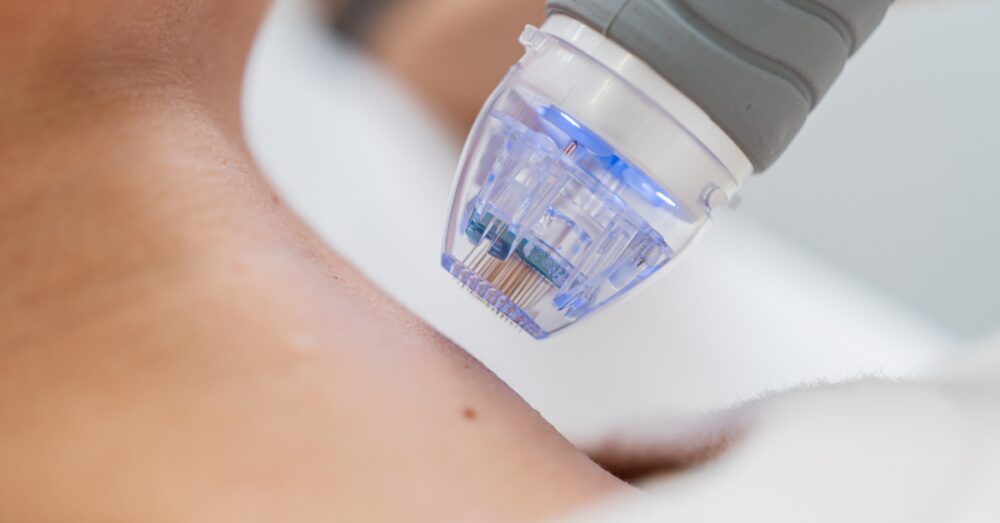
Alt text: A radiofrequency microneedling device handpiece being held against the skin during a body treatment session
How Does Traditional Microneedling Work?
Traditional microneedling devices use tiny needles to puncture the top layers of the skin at controlled depths, usually between 0.5 mm and 2.5 mm. These micro-injuries signal your body to produce fresh collagen and new elastin as part of the healing process.
The result is thicker, firmer skin over time. For facial concerns like acne scars and fine lines, this works beautifully. For cellulite, it can improve overall skin texture and skin tightening to a degree, but the needle depth often doesn’t reach the deeper layers where cellulite actually forms.
A topical numbing cream is applied before microneedling treatment, so discomfort is minimal. Sessions are relatively quick, depending on how large the treatment area is.
Radiofrequency Microneedling Explained
RF microneedling takes the concept further. In addition to the micro-injuries created by the needles, radiofrequency energy delivers controlled heat into the deeper layers of the skin, specifically the deep dermis and the tissue just beneath it.
This heat stimulates collagen remodeling at a level that traditional microneedling can’t reach on its own. The body responds by producing new collagen, new elastin, and tightening the existing structural framework of the skin. Needle depths for body treatments can go to 4 mm or beyond, making RF microneedling more suitable for targeting cellulite and skin laxity.
The combination of mechanical micro-injury and RF energy is what makes this approach more effective for body concerns than standard microneedling alone.
Why Is Cellulite So Hard To Treat With Surface-Level Procedures?
Here’s the honest part. Cellulite doesn’t just sit in the top layers of the skin. The dimpling you see on the surface is caused by structural issues happening 5–15 mm below — fat tissue pressing through bands of connective tissue in patterns that create that uneven look.
Most traditional microneedling devices max out around 2.5 mm. That’s great for skin rejuvenation and improving texture, but it may not reach deep enough to meaningfully reduce cellulite at its source.
This is why managing expectations matters. You may see smoother skin and improved skin quality, but significant cellulite reduction usually requires treatments that address the fat and connective tissue beneath the surface, not just the skin on top.
Microneedling For Cellulite: What Does The Evidence Say?
Studies on RF microneedling for cellulite show promising but moderate improvements. Most clients see noticeable smoothing after a series of 3–6 sessions, with results continuing to develop over 3–6 months as collagen remodeling progresses.
Mild to moderate cellulite tends to respond best. Clients with more severe, deeply structural cellulite may see some improvement in skin texture and firmness, but are less likely to see dramatic cellulite removal from microneedling alone.
Results vary based on factors like skin types, the specific device used, treatment depth, and individual biology. This is exactly why a thorough consultation matters, because what works beautifully for one person may need to be adjusted or combined with other treatments for another.
How Does RF Microneedling Compare To Other Cellulite Treatments?
Not all cellulite treatments work the same way, and choosing the right one depends on your specific concerns.
RF microneedling works from the inside out, specifically by stimulating your body to build fresh collagen and tighten tissue over time. Deep tissue radiofrequency devices (like Thermage or Exilis) heat larger areas of fat tissue and skin without needles, which can help with skin tightening but may be less precise.
Injectable options target the connective tissue bands directly, releasing the structural cause of dimpling. Noninvasive options like ultrasound cavitation focus more on fat cells than on skin structure.
When weighing your options, consider your cellulite severity, whether you also have concerns about loose skin, your comfort with downtime, and your budget for a full treatment plan.
Who Is A Good Candidate For Cellulite Treatment?
A good candidate for microneedling or RF microneedling for cellulite typically:
- Has mild to moderate cellulite on the thighs, buttocks, or stomach
- Is in generally good health with no active skin infections in the treated area
- Has realistic expectations about gradual improvement rather than instant cellulite removal
- Is willing to commit to a series of sessions for optimal results
If you’re pregnant, have certain autoimmune conditions, or are on blood-thinning medications, your provider will want to discuss whether treatment is appropriate for you. A preconsultation screening ensures the approach is safe and tailored to your body.
What To Expect: Sessions, Recovery, And Results
Most treatment plans involve 3–6 sessions spaced about 4–6 weeks apart. Each session lasts roughly 30–60 minutes, depending on how large the body area is.
Immediately after, expect some redness, mild swelling, and warmth in the treated area, similar to a sunburn. These signs typically fade within a few days. Most clients return to normal activities within 24–48 hours, though you’ll want to avoid intense exercise, sun exposure, and hot baths for a short period.
Results build gradually. You may notice smoother skin and improved firmness within a few weeks, but the most significant changes from collagen remodeling appear at the 3–6 month mark.
Combining Treatments And Lifestyle Factors
For more effective results, many providers recommend combining RF microneedling with complementary treatments such as body contouring, topical products with ingredients like hyaluronic acid, or manual lymphatic drainage.
Lifestyle factors also play a real role. Maintaining a healthy lifestyle with regular movement, hydration, and balanced nutrition supports your body’s ability to produce collagen and maintain results. Cellulite has a genetic and structural component, so even the best treatment plan benefits from ongoing maintenance.
After completing a treatment series, periodic maintenance sessions (every 6–12 months) can help preserve smoother, firmer skin over the long term.
Frequently Asked Questions About Microneedling in Philadelphia
Can microneedling alone get rid of deep cellulite on the thighs, or do I need RF?
Traditional microneedling can improve skin texture and firmness on the thighs, but for deeper cellulite, RF microneedling tends to deliver more effective results because it reaches the deeper layers of the skin where structural changes are needed.
How long after my last RF microneedling session will I see the smoothest results?
Most clients notice the smoothest results around 3–6 months after their final session. This is when collagen remodeling peaks and the skin’s appearance continues to improve even without additional treatment.
Is microneedling for cellulite on the stomach as effective as on the buttocks or thighs?
It can be, but results depend on skin thickness, the severity of cellulite, and how much loose skin is present. The stomach sometimes requires more sessions or a combination approach for optimal results.
Will my cellulite come back after finishing a full microneedling treatment plan?
Cellulite can gradually return over time due to aging, hormonal changes, and lifestyle factors. Maintenance sessions every 6–12 months help preserve your results and keep skin looking smoother.
Can I combine microneedling for cellulite with at-home skin tightening tools or creams?
Topical products with ingredients like hyaluronic acid can support hydration and skin quality between sessions, but at-home devices generally don’t reach the needle depth or deliver the RF energy needed for meaningful cellulite reduction. Always check with your provider before adding anything to your routine.
Ready To See What’s Possible For Your Skin?
If you’re considering cellulite treatment in Philadelphia, PA, Body+Beauty Lab is here to help. Our licensed providers will walk you through your options, assess your skin, and build a treatment plan designed around your goals.
We also have locations in Radnor, PA, West Palm Beach, FL, and Bay Harbor Islands, FL, so wherever you are, expert care is within reach. Schedule your consultation today and take the first step toward smoother, more confident skin.